Kansai-based Clinic Combining Cancer Immunotherapy,
Hyperthermia & Reductive Electron Therapy
HaS Shimabukuro Clinic
Reservations & Inquiries by PhoneTEL.072-640-0170
Outside of clinic hours, an answering machine will respond.
3F Goda C&E Building, 2-13-14 Kamikorori, Ibaraki City, Osaka 567-0065
Hyperthermia TherapyHyperthermia
Hyperthermia Therapy (RF-8) |
Principles & Features (Thermotron RF-8: manufactured by Yamamoto Vinita)
|
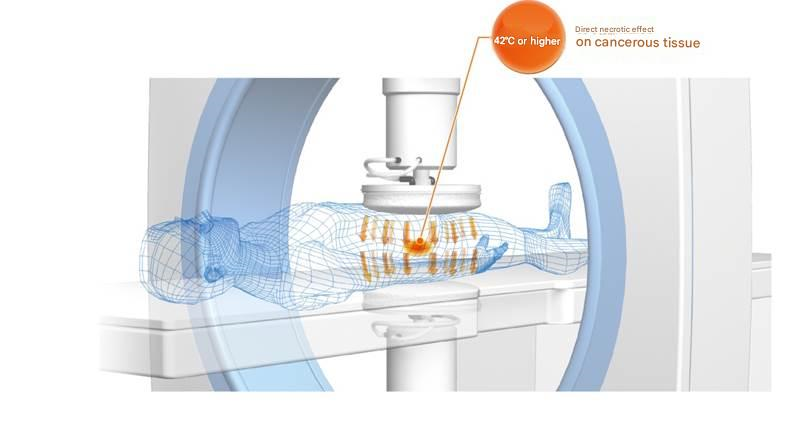
| 39℃ | Host immune activation effects (dendritic cells, NK cells, interferon-γ), enhanced drug uptake, endorphin activity ↓ Immune activation through heating (mounting an effective attack against cancer cells) |
| 40℃ | |
| 41℃ | |
| Above 42°C | Direct necrotic effect on cancer tissue |
2. Improved QOL (quality of life)
It relieves cancer-related pain, restores physical strength, improves appetite, and lifts mood — aiming to improve QOL.
3. No side effects or accumulation, so in principle it can be repeated indefinitely
Heating up to 43°C is within the physiological range for normal tissue and poses no problem. Rarely, it may cause fatty induration, but this resolves after a short time and is not a concern.
Because of side effects on normal cells, radiation and chemotherapy cannot be used beyond certain limits. Hyperthermia has no such restrictions and can be performed over the long term.
4. Broad scope of application
Applicable not only to early-stage cancer but also to recurrent and metastatic cancers.
Cancers Treated
Treatment can be applied regardless of cancer type or site.Metal stents (vascular, biliary, ureteral, gastrointestinal) do not pose a problem for treatment.
If there is metal in the body (such as bolts from a fracture), please notify us in advance.
The brain, eyes, and areas around cardiac pacemakers are excluded from treatment.
Synergy with Standard Treatments
1. Combination with SurgeryPre-surgery, it suppresses cancer growth and boosts immune function. Post-surgery, it has been reported to be effective in suppressing recurrence.
2. Combination with Chemotherapy
Synergistic effects have been recognized with commonly used anticancer drugs.
When heating increases blood flow around the tumor, anticancer drugs are delivered efficiently via the bloodstream to the tumor lesion; uptake increases several-fold and efficacy improves. This also offers the benefit of reducing the drug dose and minimizing side effects.
Long-term use of anticancer drugs can lead to drug resistance, rendering them ineffective. Hyperthermia is known to induce production of a special protein called Heat Shock Protein (HSP) in the body, which partially inhibits the mechanism of resistance acquisition.
3. Combination with Radiation
As cancer grows, blood flow within the tumor decreases and the tissue becomes acidic due to low nutrition and low oxygen. Such large cancers are typically less responsive to radiation. However, hyperthermia works well against hypoxic, low-nutrient cancers, and combining the two produces a sensitization effect.
4. Combination with Cancer Immunotherapy
Combination with Activated Lymphocyte Therapy, Tumor-Infiltrating Lymphocyte Therapy, Dendritic Cell Injection Therapy, Cancer Vaccine Therapy, and similar approaches enhances the effects of standard treatments and helps improve the patient's condition.
Risks & Side Effects
The Thermotron RF-8 is a treatment device approved for insurance coverage as a high-frequency hyperthermia system for cancer. With many cases, both safety and efficacy have been recognized.
During heating, the skin may feel stinging or warm. Rarely, subcutaneous fat may develop nodules (fatty induration), but these disappear in 1–2 weeks.
Sweating during heating may cause mild dehydration, which resolves with fluid replenishment after treatment.



Affiliated Hospitals
Medical Foundation Idokai
Jujo Takeda Rehabilitation Hospital
+81-75-671-1121(main)
Medical Corporation Ryushikai IGT Clinic
+81-6-6391-0080(main)
Osaka Endoscopy Clinic
+81-6-6391-0080 (main)
Social Medical Corporation Towakai Dai-ichi Towakai Hospital
+81-72-671-1008 (main)
Partner Companies
Cell Medicine Co., Ltd.
(Autologous Cancer Vaccine Therapy)