Kansai-based Clinic Combining Cancer Immunotherapy,
Hyperthermia & Reductive Electron Therapy
HaS Shimabukuro Clinic
Reservations & Inquiries by PhoneTEL.072-640-0170
Outside of clinic hours, an answering machine will respond.
3F Goda C&E Building, 2-13-14 Kamikorori, Ibaraki City, Osaka 567-0065
Cancer Immunotherapyimmunotherpy
Cancer Immunotherapy
|
Tumor-Infiltrating Lymphocyte Therapy(TIL Therapy)While pleural and ascitic fluid are typically drained and discarded, Tumor-Infiltrating Lymphocyte Therapy (TIL Therapy) is a method that makes use of the cells contained within them. In TIL Therapy, antigen-recognizing T cells play the central role. Pleural and ascitic fluid contain cells such as Cytotoxic T Cells and Helper T Cells that act to attack cancer cells, while regulatory T cells — which suppress attacks on cancer cells — are barely present. By culturing, activating, and expanding the T cells contained in pleural and ascitic fluid, their ability to attack cancer can be enhanced. Treatment Flow Pleural and abdominal punctures are performed, and lymphocytes and cancer cells are separated using a special method. Anti-CD3 antibody, IL-2, and other reagents are added, and the cells are cultured for approximately 2 to 3 weeks. The culture medium is then removed and the cells washed; the activated and expanded lymphocytes are suspended in saline and returned to the body. 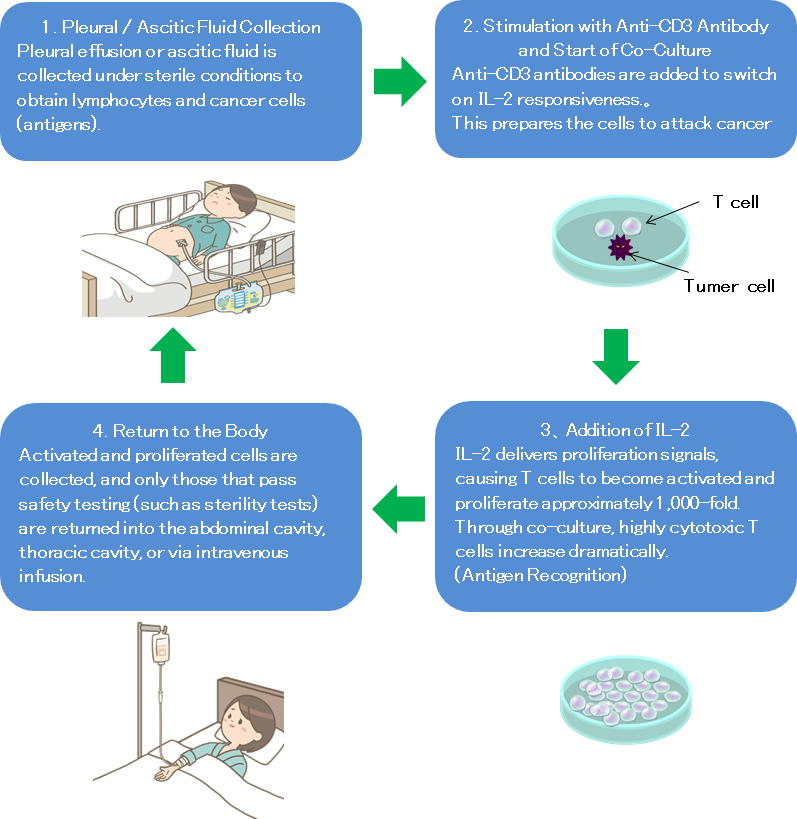 From the day of puncture or blood draw to infusion, the first session takes approximately 3 weeks. Subsequent infusions take about 2 weeks. Because the number of sessions is limited, treatment typically averages 4 to 6 infusions. Treatment Duration & Frequency
Risks & Side Effects As immune cell therapy uses the patient's own immune cells, mild fever or rash may occur in some cases, but no other side effects are observed, and there is minimal burden on the body. Because side effects are extremely rare, treatment can be continued while maintaining quality of life. Treatment Outcomes at Our Clinic We have non-surgical pancreatic cancer patients who, after being given 1–2 months to live at other hospitals, have maintained good QOL and lived ordinary daily lives for more than 2 years. We have also seen many cases in which the pleural fluid of lung cancer patients disappeared within several months after TIL treatment. |



Affiliated Hospitals
Medical Foundation Idokai
Jujo Takeda Rehabilitation Hospital
+81-75-671-1121(main)
Medical Corporation Ryushikai IGT Clinic
+81-6-6391-0080(main)
Osaka Endoscopy Clinic
+81-6-6391-0080 (main)
Social Medical Corporation Towakai Dai-ichi Towakai Hospital
+81-72-671-1008 (main)
Partner Companies
Cell Medicine Co., Ltd.
(Autologous Cancer Vaccine Therapy)